Showing posts with label Batman. Show all posts

Monday, 14 November 2016

Are Trilogies Dead!?


What happened to movie trilogies?

It was always exciting to watch the first movie of a trilogy, seeing the world being built up and what that world presented. As the second movie came along, we saw the world expand and we delved deeper with our character and finally the last movie was the conclusion. However, movies no longer use trilogies to tell their story but instead expand to six or more films.

This isn't a bad idea. In some cases more than three movies is necessary such as Harry Potter and Mission Impossible franchise where a continuous story of that world is intriguing. However, the problem with movies that over gamble and release more than three films is a loss of interest in the main protagonist. In the Bourne franchise, the resolution for the third movie was all we need but with the fourth and fifth it lost its emotional connection we had with Jason Bourne. Resulting in two boring flicks.


The reason movies get boring after the third installment is a trilogy acts as a three act structure. With the first movie represented as the setup, the second film is the confrontation and the last installment is the resolution. An example is the Star Wars trilogy with New Hope acting as the setup by setting the rules and introducing the worlds, Empire Strikes Back is the confrontation (literally) with Luke fighting his demons and against Vader, and finally Return of the Jedi was the resolution and closing the book on that story. Until The Force Awakens (which I like) was released in 2015 which lost the emotional connections and tries too hard to rekindle our attachment. The death of Han was the only emotional connection I had with the characters.

The biggest support for trilogies is the experience. Now, with these universe movies they are also experiences but with trilogies the three films watched back to back is more magical because that time we have with out character means we see their development by the end of the last film. While with a six movie franchise, we see the development early on and then we are left with three other movies with our character already blossomed and not flawed, an example is the Die Hard franchise. John McClane becomes a super hero and doesn't do anything wrong and can survive any explosion. As a result It becomes boring and the stakes are lost.


As I have mentioned, franchises such as Harry Potter work with more than one movie because of how many books there are and the complex stories. Imagine a movie being a fat piece of dough and the first movie kneads it, the second movie proves it and the third movie bakes it. What do you get? A perfectly tasty bread. But then take the dough and stretch it for some reason, holes start to appear. Too much stretching is the fourth, fifth and sixth installment, You don't need to stretch it but you do it anyway. Plot holes become more apparent and the bread becomes a mess. That's what happens when a simple story gets the 10 movie treatment. Simple story is better when told in a simple way. Bread is better when baked in a simple way.

But...

Is it a bad idea for trilogies to die away?

I believe that trilogies dying and making way for more expanded movies can lead to exciting films. We are in a new era of cinema which I call the "universe films". Studios are now beginning their own universes that can expand a film's world. It is an exciting time because this change is still in an early phase and will only grow to become better.

In essence the universe building will make cinema exciting again. With trilogies, once it's done,  it's done. Audiences crave more from films and want stories to continue. Movies that have more than three films can explore more of the world that was established, Mission Impossible has been going on forever and has continually grown stronger and Fast & Furious has upped their game (for better or worse) and deliver movies the fans want. They have both become better with their latest release.

Without the restriction of three movies, studios can build their movies from the ground up and take as much time to tell a story. It's all about creating an excitement with the audience and a studio slate with a movie universe is more exciting than a movie slate with just three films.

Also...

Movie trilogies dying is an evolution in cinema. We now get franchises that could last a hundred years. Is it a good idea? Maybe or maybe not but it's a necessary step in discovering how far we can take this art form.

Thursday, 3 November 2016

Is Christopher Nolan an Auteur?


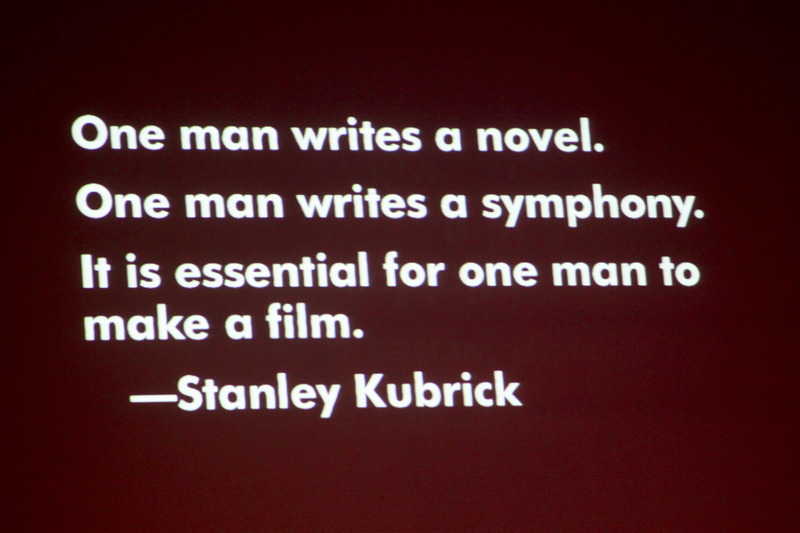
Christopher Nolan is cinema's most interesting directors. His movies have wide spread love and in some cases hate but there is no doubt that his movies have a lot of intrigue.

Chris Nolan has released this millennials best films such as Memento, The Prestige, The Dark Knight and Inception. His filmography is different, from the Sci-Fi to comic books but they all feel 'Nolan-esqu'.

This begs the question, is Christopher Nolan an auteur?

We must first discuss what an auteur is. In essence the Auteur theory created way back in the 1940's by Andre Bazin and Roger Leenhardt states that a director is the creative force, more than a screenwriter.

The blocking, lighting, position of a camera and scene length conveys the message of the film more than the plot line. The style of the film is what defines it. An example of an Auteur is Alfred Hitchcock, his suspense and sexual taboo has made it easy for any audience member to know they are watching a Hitchcock film.

Auteur theory projects the director responsible for a movies quality and their directing must be recognizable that anyone can differentiate their work with others.

REALISM


It becomes clear in every Nolan movie that it is set in some real world reality and has become a trademark for him. His movies differ in genre but it's the sense of realism that connects them to Nolan.

It was first prevalent in Batman Begins by taking the caped crusader and shoving him into the real world where Gotham was an actual city and every person was a real character not just a comic caricature. However this has always been with Nolan since his first feature Following, a film which a man follows people around for inspiration. With a limited budget, Nolan and his actors had to shoot in and around London.


Nolan also achieves his real world feel by the use of practical effects and location shooting. For Interstellar the space craft(above picture) was a real craft built for the actors. They even built actual compartment, tables and whiteboards. It was the detail that was put into the space craft that brought us closer, there were hidden seat on the floor and laptops shoved in cupboards that provided the realism. We might have not seen every thing in the space craft but it's that detail that makes a movie special.

For Doctor Mann's world, Nolan and his team went to Iceland and filmed on beautiful glaciers, bringing us closer to the extreme weather and environments the characters had to deal with.

IMAX 


Nolan is pioneering the use of IMAX and it has become an essential tool for him. He first used the IMAX camera for The Dark Knight but only for selected scenes. However it was never wasted and made The Dark Knight feel bigger.

It has been used for every other Nolan film since except Inception for the reason IMAX would lose the films dream quality. For Interstellar, Nolan used it the most and even fitted on a rocket miniature and actually breaking the very few IMAX cameras in the world.

It has become a staple for Nolan and when watching a his movie I look forward to the IMAX scenes because I know they will be visually stunning.

THEMES


In Chris Nolan movies, it becomes clear that his movies protagonist are all about the struggle of who they are. In Memento Leonard struggles to find out who he has become and uses tattoos to keep track of himself and the others around him.

In Batman Begins, Bruce travels far away from Gotham to find out who he is and how he can adapt to the world he lives in. The Dark Knight Rises Bruce again struggles with his identity of being Batman and eventually succumbs to the fact he'll have to die as Batman before he truly can live as Bruce.

Inception has Cobb struggle with the loss of his wife and children and distorts his reality to become the man he was, before his wife's death.

Interstellar has Cooper being a farmer even though he's the world best pilot. But when the time arises he finds out his true purpose and becomes Murph's ghost.

Nolan hits on identification and where his movie protagonist belong in their world. Everyone of them starts out lost and gradually finds out where they belong in their world.


CONCLUSION


Christopher Nolan is an auteur. His movies are distinct and can be recognized by the themes and techniques.

His style is similar to David Fincher with The Dark Knight being heavily influenced by Seven but Fincher is only an inspiration. Their works are two different animals.

Nolan's use of IMAX, his themes and realism helps audiences identify with him. Being an auteur means that a director's films are recognizable and can be affiliated back to them. This is the case for Nolan. We know when we are watching his films. 

Nolan will be remembered as a pioneer in film and deserves to be called an auteur. 

Wednesday, 2 November 2016

The Problem with Doctor Strange


*CONTAINS SPOILERS*

Doctor Strange is the third in Marvel's phase three line up. It stars Benedict Cumberbatch as Steven Strange and is about his recovery and enlightenment with the help of The Ancient One (Tilda Swinton). The movie has spectacular visuals and choreography that transport audiences to new realities but it has some problems that made this film a 'good' film but not a 'mind blowing' one. 


When I watch a movie, I judge it on how the movie was directed and if the story was interesting. I do not judge a movie on, if they got a certain character correct or if they put some Easter eggs in there. This is no different to comic book movies. I don't care if a movie has got Batman correct because if the movie sucks then the movie sucks.


I have no knowledge of Doctor Strange so I watch this movie as I would any other by not knowing that much about our main protagonist. Which the movie doesn't help, Doctor Strange has no character arc. This is shown when he only struggles with his powers for about five minutes and he masters the skill of magic in about 15 minutes. There's no struggle nor does he change his ways to become more skilled. He just achieves master level in minutes.


A struggle of a character who has worked hard to earn his skill helps create tension however Dr Strange does not struggle meaning there is no conflict with his inner-self. He doesn't beat his demons because he never changes throughout the movie. He stays the same man from beginning to end. The only thing he learnt was there's something bigger out there.


I hate it when these movies have the whole world at stake. THIS DOES NOT CREATE TENSION! It's boring because I don't care if everyone dies as I don't know them.


Making a movie smaller is not a bad thing. It actually means the stakes are bigger for our protagonist. Doctor Strange should make a hard decision to save the people or person he loves or cares for, not the world because who cares? The movie should have focused on Strange and Christine Palmer (Rachel McAdams) because they have a deeper relationship that we as the audience can relate to. How many of you go out and save the entire world? and how many of you would sacrifice yourself for the people you love?


In The Dark Knight Rises, Chris Nolan shows that even an entire city can still have stakes involved. But how they do it, which Doctor Strange fails to do, is establish other characters and their world. In The Dark Knight Rises, we see other characters interact in their world, from Gordon, Blake and Foley. They all have something to lose if they fail. Batman doesn't save the entire world, he save his city. A place we have seen throughout the entire trilogy, not like Hong Kong for Doctor Strange. He wants to save his legacy and the people he cares for. For a third movie in a superhero trilogy, it was small compared to Doctor Strange and it worked in their favor. The movie focuses on a few characters and allowing us to see what they can lose. 


In Doctor Strange, we see he cares for Christine, but the threat is in Hong Kong. Thousands of miles away from her. She's not in harms way nor does she know what is happening. The giant CG blob fest was neat to look at but it never transmitted fear. The bomb in The Dark Knight Rises was ticking and every second lost was a step closer to everyone's loved ones being dead. For Doctor Strange I had no idea what was happening because they weren't clear on the outcome. 

With all these world shattering threats, what will make Infinity Wars stand out? 

I also want to compare it with Interstellar. Both relied on visuals to push the story but Interstellar is much more effective because of the emotional connection we see with Coop and Murph. That was missing in Doctor Strange. There was no emotional connection between him and Christine. They had a fling in the past and she does mean something to him but we never see anything that really shows us their connection. They never have time to themselves and discuss their past and maybe their future. She is ultimately forgotten and without the emotion, a movie loses it soul.


How Doctor Strange beat Dormammu was pathetic. I have no problems with rewinding time - I enjoyed the battle when time was reversed and we see that effecting the fight. But the loop was unforgivable. This is where I don't judge a movie by how comic accurate they are but by how well they are made. Doctor Strange fans probably know what that necklace power is capable off - but for me they did not establish enough rules. The biggest one is - how did he stop the loop? They never show us and they probably didn't know themselves. It took me right out the movie because of how ridiculous it was. Film is a visual medium, show us the important parts! 

On the other hand if they wanted to go down the 'Earth in danger route', there was only one way to make this movie incredibly ballsy. Replace Dormammu with Thanos. At first when Steven Strange went on his acid trip, I thought he saw the impending doom of Thanos, this got me super excited but alas I was wrong.


Instead of having Dormammu, making Thanos the antagonist and losing to Doctor Strange shows that Thanos needs the infinity gems because he is not strong enough without them. By making Doctor Strange defeat Thanos it gives him the important role of guiding the Avengers because Strange would have the know how to defeat him. It would have shown the importance of the gems and how far Thanos would go to collect all of them. With Thanos defeated, he would come back angrier and wary of Earth's threat making him a more fierce villain. 

Overall Doctor Strange was a good movie. It focused more on the visuals then the story and for that it lost its emotional footing. The movie lacked heart and lost itself in the Marvel formula. Mads Mikkelsen was sorely wasted and should have been the only antagonist. A more emotional story with those visuals would have created a gripping movie from start to end.

But I do recommend you watch it and see for yourself.     


Friday, 28 October 2016

TV or Movies?

INTRODUCTION


If I was to say you could only watch TV shows or movies for the rest of your life, what would your answer be? For me its movies and if this was 10 years ago I would believe you would also choose movies but now I see audiences gravitate towards TV shows more. With the rise of Netflix and binge watching giving us 12 hours of pure ecstasy and with the quality of these shows improving we see TV becoming more popular. However can TV shows replace movies? Let us look at two big point for TV that is always used against movies.

LONG FORM STORYTELLING


When it comes down to TV shows the main argument for it and against Movies is the writers have time to expand and develop their characters while movies averagely have 2 hours to do the same. However I see that as a weak argument. Let's take TV's greatest show Breaking Bad. It had 5 seasons, with season 1 having 7 episodes, 2-4 having 13 episodes and the final season having 16. And with the help of a website it calculated that fans spent 1 day, 23 hours and 32 minutes watching Walt's slow descent from humanity. Now let's compare that to Drive, a Nicolas Winding Refn film. A movie with similar themes of a slow descent from humanity.


Drive is 1 hour and 40 minutes long and just like Breaking Bad is slow and lets scenes ferment. With Breaking Bad having a budget of $3 million per episode and Drive only having $15 million for the whole movie, surely Breaking Bad is far greater than Drive? Well that's down to the audience but Drive tells the same character story Breaking Bad does. Sure both go their different ways and tell a characters humanity slowly fading differently but both achieve the same outcome. As the audience we get more back story for Walt which is needed to give him empathy and for us to route for him even when he does some despicable acts and with Ryan Gosling appropriately named Driver, his mysterious background is what attracts us to him. At first we see he drives robbers to their mark and makes the escape. But as the movie gradually shows us more we sympathies when we see his lighter side with Irene. His average apartment and having three jobs we know he doesn't earn a lot so we want him to succeed.

Both Walt and the Driver start on their own personal high ground, obviously Walt starts higher but they both have good guy morals however with circumstances intervening they both fall from their perch. At the end of Breaking Bad and Drive both get their ultimate due and we question who they really are. Leaving unanswered question about our character, the main one what happened next?

Long form storytelling is and will always be an advantage. More time with characters means we can understand their situation. However movies can achieve the same emotional outcome even with far less time. Films such as Taxi Driver and Inside Out achieve emotional levels that replicate those on TV. It's not about how much time you have, it's about how you use them.

CREATIVE FREEDOM


There is no doubt that movies are becoming very studio involved with whole departments of suits deciding what goes in and out the movie. Marvel, Warner Brothers and Disney all have department for their movie universes and whatever they say goes. But is that the same with TV shows?

There are some freedom barriers but not on the same scale. In many cases TV shows do have far greater freedom than movies, however, this is due to Movies watering down their content to make money while TV shows just need high ratings to be successful and the best way for that is controversy. TV shows that don't hold back on violence or politics are deemed better and more people watch them. I think this is because we want the truth when it comes to such agendas. The brutal nature of House of Cards shows us a dramatized workings of the White House but looking at today's American politics has become more real and more interesting.

However it depends on who you are in the industry, if you are a TV director there isn't much creative freedom because the show writers essentially run the whole thing and it's them that dictates the style and feel of an episode. On the other hand that is different to films where the director runs the show (sought of) while the writers don't get much say, an example would be Steven Spielberg's Bridge of Spies, which had been written by Joel and Ethan Cohen.


In movies such as Batman v Superman, Suicide Squad and Fantastic Four it seems that the comic book genre is hit the worst with Studios intervening and that's due to comic book movies still being the hot property in Hollywood. Studios spend up to 200 million and need 1 billion to make it financially successful in their eyes. So these films must cater for every demographic to get the most for their buck. This plays no bearing in TV comic book shows, Netflix's Daredevil to CW's The Flash have been received with critical reception by fans and critics. Is it down to more freedom? It could be the case because Ant-Man though having average reviews and not deemed a bad movie is a bland and boring superhero film. With someone like Edgar Wright, Ant-Man would have had its identity and no doubt would have been a far superior movie but Edgar Wright left due to creativity conflicts and what did Marvel do next? They appointed a 'yes' man to take over.

I believe that TV does have more creative freedom to tell a story. Imagine Game of Thrones as a movie and how many cut backs would have been made or how many add-on to accommodate the biggest market at the moment China. For writers TV is where to be and for directors Movies is where to be but it all depends on who you are. A Chris Nolan movie would never be altered by the studio nor would a studio ever touch a Scorsese flick. In essence it's all about building a reputation.

QUALITY


Quality is what these two mediums will be judged on because no audience cares about backstage squabbles, all we want is a good product. And when it comes down to it Movies and TV shows both have the good and bad, and both have benefits and disadvantageous. Could I see Breaking Bad as a good movie, no, and could I see Mad Max: Fury Road as a TV show, absolutely not. Why? because they both understood their medium and stuck with the element that was given to them. Breaking Bad had the option to be one season or 10 seasons but the writers new when to stop and how long to take. The same with Mad Max, it new it had a limited run time so they made a fast paced simple movie and the atmosphere in the cinema cannot be replicated on TV. It's up to the audience to decide which is better but for me we should celebrate that at least there's something good to watch everyday.